

Voice message without visualization (waveform)
A voice message in Telegram is a special format: a round microphone icon + an animated sound volume visualization (waveform). For Telegram to recognize a file as “voice” rather than a regular audio tr
A voice message in Telegram is a special format: a round microphone icon + an animated sound volume visualization (waveform). For Telegram to recognize a file as “voice” rather than a regular audio track, the file must be strictly in .ogg format with the opus codec.
If you upload
.mp3, .wav, .m4a, or .ogg with a different codec (vorbis, for example), Telegram will display the message as a regular music file, without a waveform and without the round play button.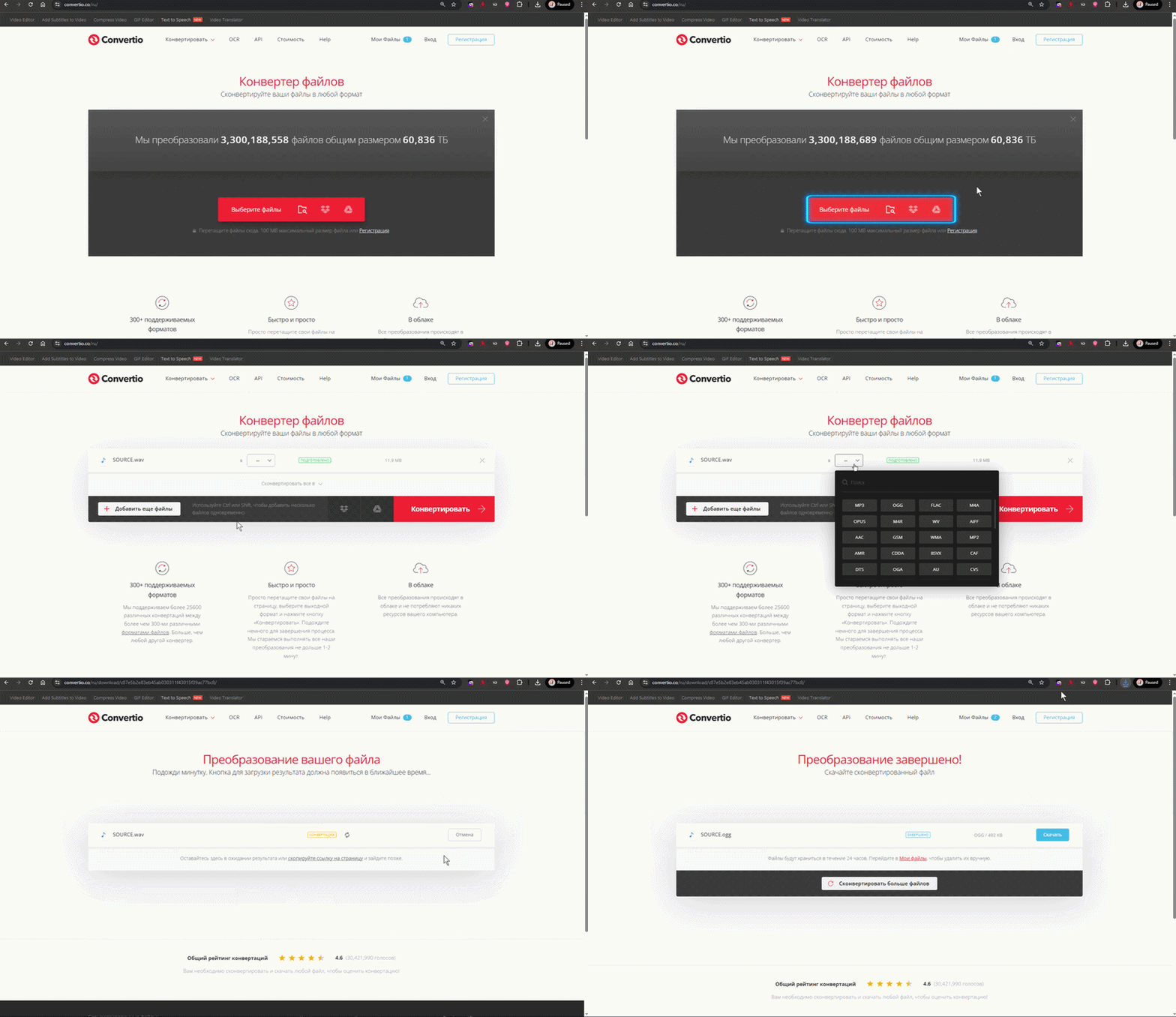
How to convert to opus
Most audio tools offer export to opus as a standard option. A few methods:
Online converter:
freeconvert.com, cloudconvert.com, convertio.co. Upload the source file and choose “to .ogg (Opus codec)”.Locally via
ffmpeg: ffmpeg -i input.mp3 -c:a libopus -b:a 32k output.ogg — this produces the required format and good compression.Record directly in Telegram (from a second account or to yourself). Download the resulting “voice message” as a file — it is already in opus. Use it for resending in the bot.
The 32 kbps bitrate is not accidental
Telegram recognizes a voice message only if the file meets its expectations: mono audio, low bitrate (16–48 kbps is enough for speech). At a high bitrate, Telegram may still display the file as a “track” rather than as voice. Use 32 kbps — the standard for voice messages.
To prevent this from happening again
Create a team template: always convert audio files to opus before uploading them to Send Message steps. If the funnel uses voice, it is better to have a ready-made ffmpeg script or a bookmark for an online converter. Leads notice the difference: a voice message with a waveform feels live, while regular audio feels robotic.
Frequently asked questions
Related


Was this article helpful?