

Why the AI Doesn't Skip a Step If the Lead Has Already Answered Appropriately
Standard behavior of the AI Reply step: it first generates its response , then checks AI Routings and moves to the required branch. If you want AI to skip its own response when the lead’s message alre
Standard behavior of the AI Reply step: it first generates its response, then checks AI Routings and moves to the required branch. If you want AI to skip its own response when the lead’s message already clearly matches one of the routings, enable the
Skip transition blocking on first run option.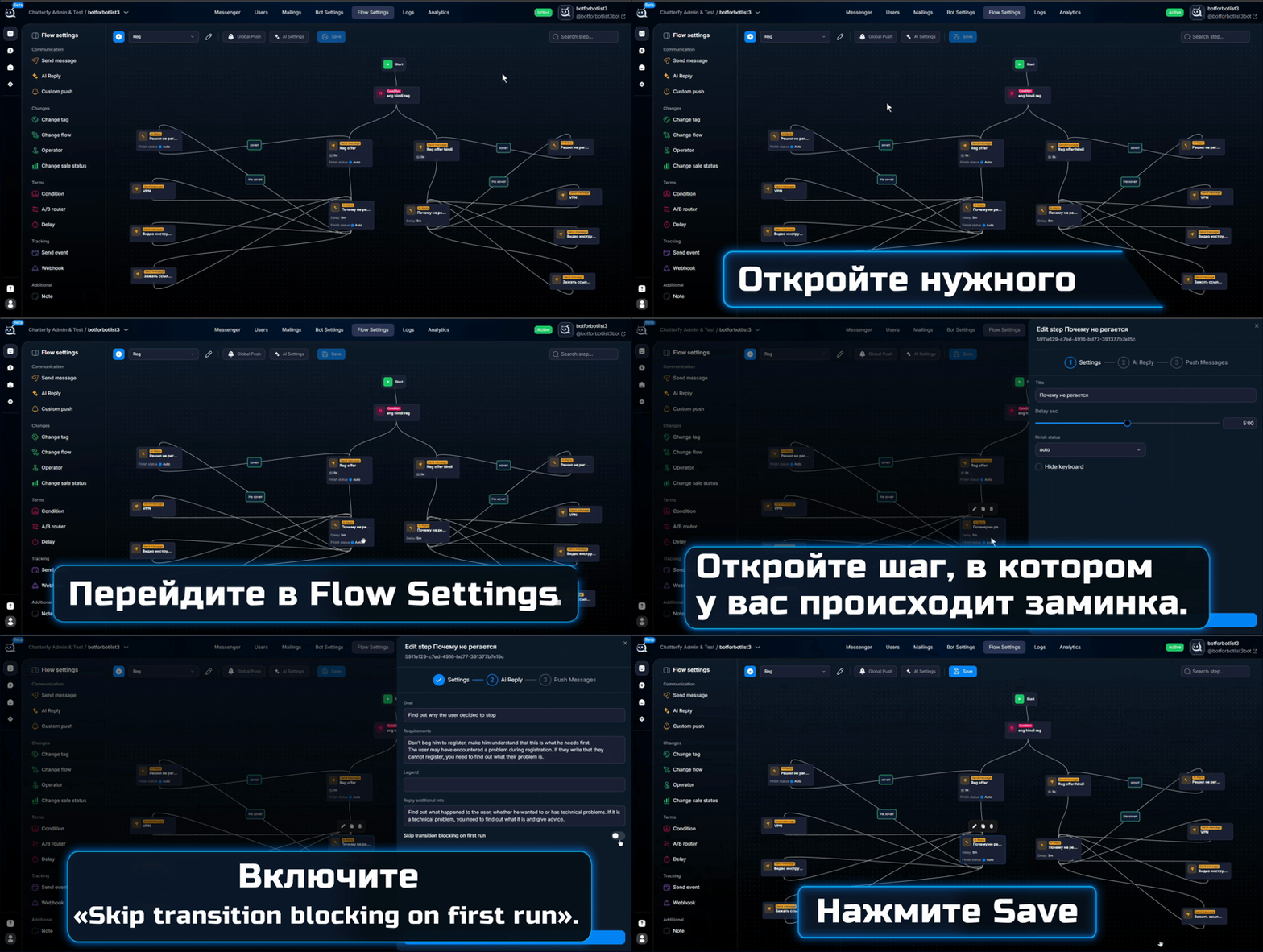
Why this is needed
Skip on the first interaction is useful in scenarios where AI acts as a router, not as a conversational agent. Example: the lead has already said “I want to sign up” — there is no point generating the response “great, let me tell you more”; it’s better to move them directly to the step with instructions. Without Skip, AI will always insert its own message, and the transition will happen only after it.
This is done deliberately so AI does not “miss” the moment in an active conversation. On most steps, the option remains disabled — AI carries on the conversation and manages transitions itself through AI Routings — semantic routing.
How to configure it
Open the AI Reply step
Enable Skip transition blocking on first run
The checkbox is located at the bottom of the step settings. Enable it and save.Check the routings behavior
Start a test run. If the lead’s first message clearly falls under one of the branches, AI will skip its response and perform the transition immediately. If the response is ambiguous, AI will still generate a reply to clarify.
When not to enable Skip
If the step is the “heart” of the conversation, where AI should conduct the dialogue for several messages in a row (qualification, warm-up, long client replies), leave Skip disabled. Otherwise, AI will skip its first response and move somewhere too early, before it has collected the data.
When it makes sense to enable it
Skip makes sense on “decision” steps: confirming a choice, transitions between funnel stages, responding to a menu (when the lead clicked a button). Anywhere the lead’s first response already provides all the information needed for the transition.
FAQ
Related


Was this article helpful?